
Key Levels
How ILPAC displays important price levels including session highs/lows, round numbers, and custom reference points.
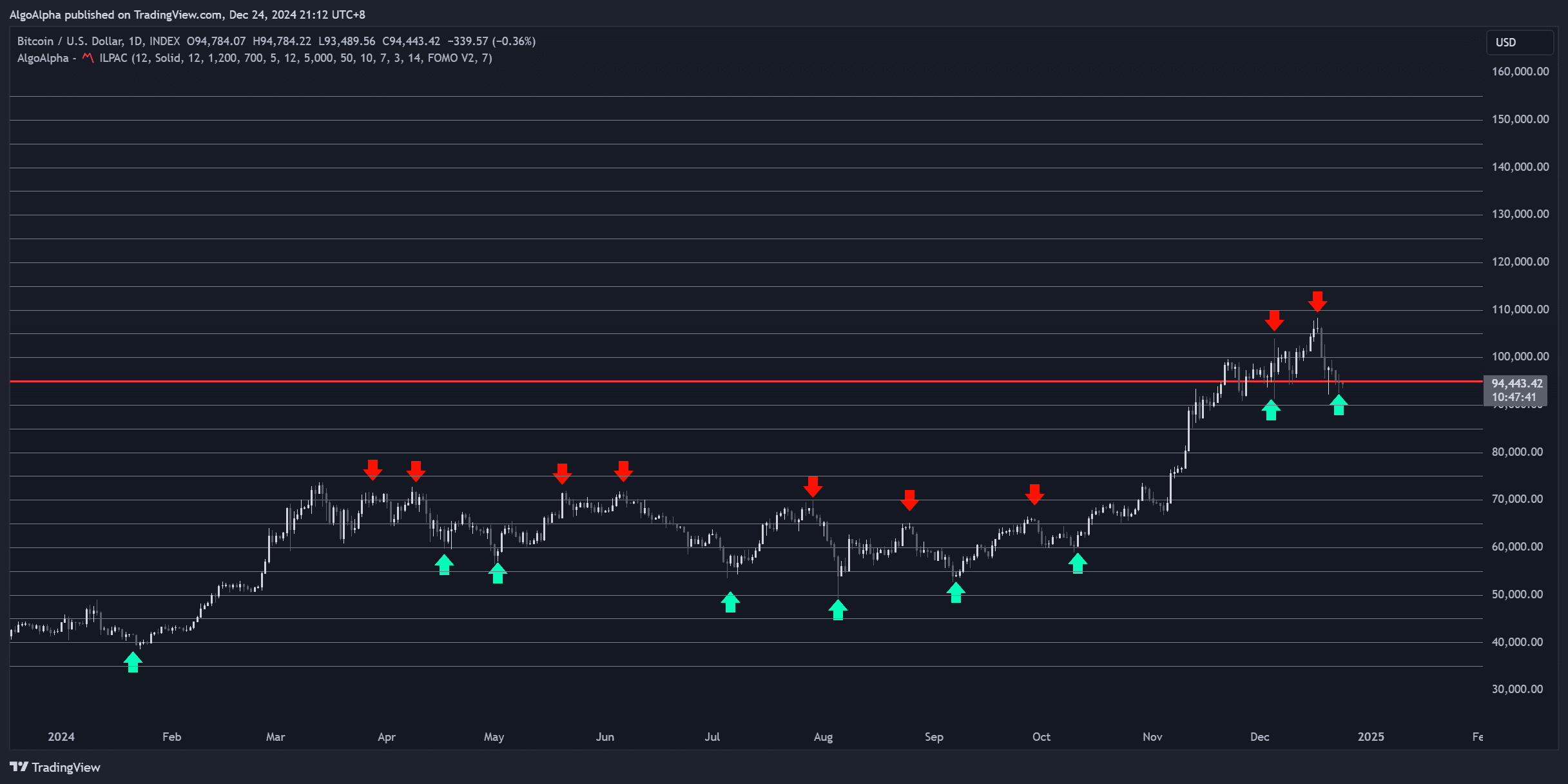
The Key Levels feature in ILPAC plots important horizontal reference levels on your chart. These include session-based levels (such as the previous day's high and low), round-number psychological levels, and other structural reference points that institutional and retail traders commonly watch.
Session Levels
Session levels are derived from the open, high, low, and close of defined trading sessions. ILPAC can plot the following session-based levels:
| Level | Description |
|---|---|
| Previous Day High (PDH) | The highest price reached during the prior daily session |
| Previous Day Low (PDL) | The lowest price reached during the prior daily session |
| Previous Week High (PWH) | The highest price from the prior weekly session |
| Previous Week Low (PWL) | The lowest price from the prior weekly session |
| Previous Month High (PMH) | The highest price from the prior monthly session |
| Previous Month Low (PML) | The lowest price from the prior monthly session |
These levels are significant because many traders and algorithms place orders at or near them. They often act as magnets for price and can function as support or resistance.
Why Key Levels Matter
Key levels serve several purposes in trading:
- Liquidity targets: Institutional traders often push price toward previous session highs and lows to trigger stop-losses and limit orders clustered at those points
- Structural reference: Session levels provide a framework for understanding whether the current session is trending (breaking beyond previous ranges) or mean-reverting (staying within them)
- Confluence zones: When a key level aligns with a support/resistance zone, Liquidation Heatmap cluster, or trendline, the probability of a price reaction increases
Round Numbers and Psychological Levels
Price tends to react at round numbers (e.g., 100, 1000, 50000) because a large number of traders place orders at these easy-to-remember levels. ILPAC can optionally plot psychological round-number levels relevant to the current asset's price range.
Using Key Levels in Your Trading
Breakout Confirmation
When price breaks above the previous day's high with momentum, it often signals bullish continuation. Conversely, a break below the previous day's low can signal bearish momentum. Key levels provide clear reference points for these breakout events.
Mean-Reversion Setups
If price reaches a key level (such as the previous week's high) and shows signs of rejection — confirmed by a CHoCH event or FOMO Bubble — this can indicate a mean-reversion opportunity back toward the session's value area.
Stop-Loss and Target Placement
Key levels are natural locations for take-profit targets and stop-loss placement. Many traders exit positions at previous session extremes, making these levels relevant for order flow and execution.
Key levels are most useful on intraday timeframes (1-minute through 1-hour) where session boundaries have immediate relevance. On daily or weekly charts, weekly and monthly session levels become more significant.
Settings
| Setting | Description |
|---|---|
| Show Key Levels | Master toggle for displaying key levels on the chart |
| Session Levels | Select which session levels to display (daily, weekly, monthly) |
| Level Style | Choose between solid, dashed, or dotted line styles |
| Level Colors | Customize colors for each level type |
| Labels | Toggle level name labels on or off |
Refer to the Settings Reference for all available options.